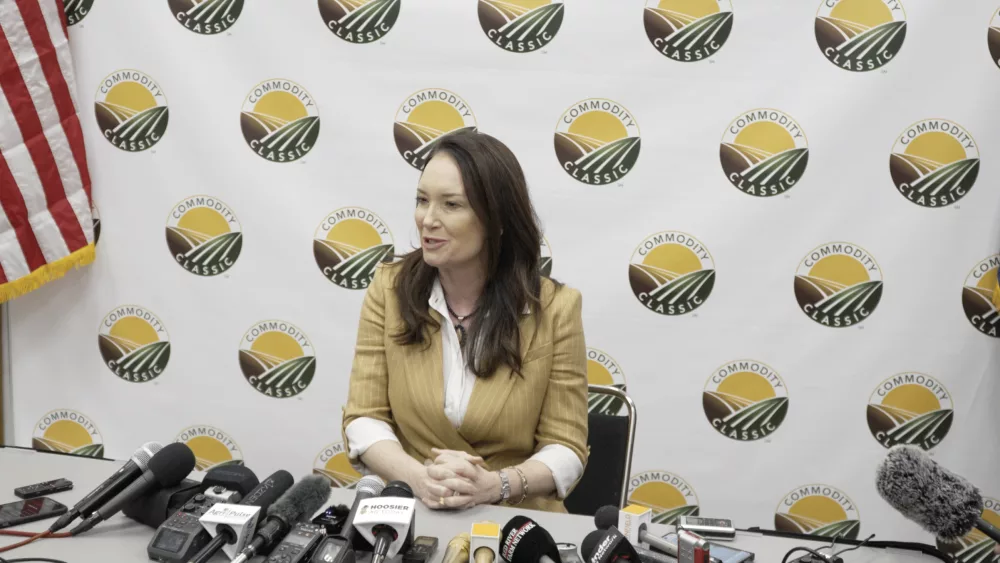
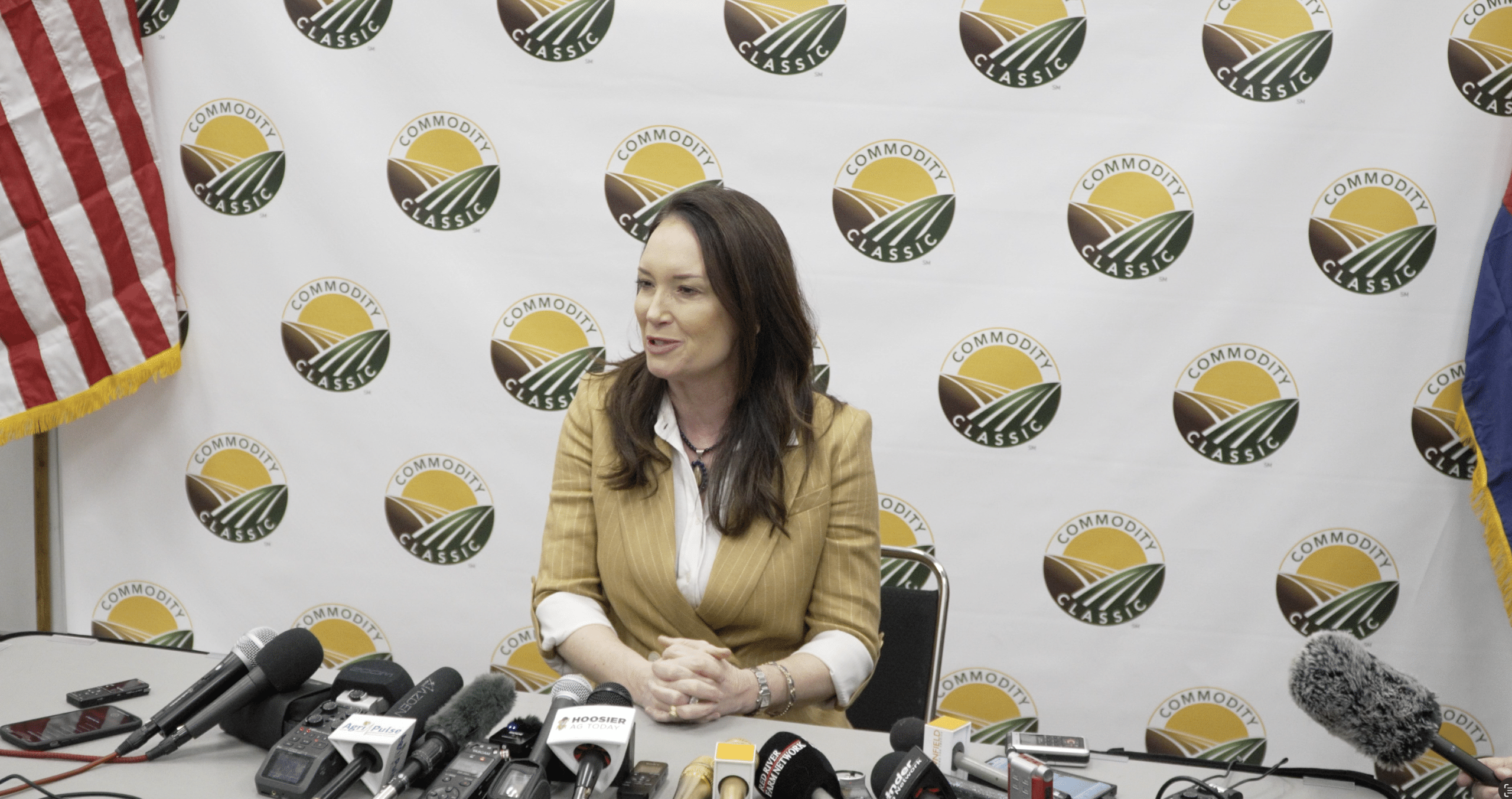
Secretary of Agriculture Brooke Rollins addressed the 2025 Commodity Classic in Denver, where she outlined several initiatives aimed at improving the agricultural economy and supporting U.S. farmers.
One of the primary announcements was the release of funds for USDA programs that had been delayed pending review. Rollins said funds for the Environmental Quality Incentive Program, the Conservation Stewardship Program, and the Agriculture Conservation Easement Program are now being distributed. “We have completed our review and are releasing the funds for these programs,” she stated.
Additionally, Rollins introduced the Emergency Commodity Assistance Program (ECAP), which will distribute $30 billion in economic assistance authorized by Congress. “ECAP is the new program to help us distribute that $30 billion in funds that Congress passed in December. They gave us 90 days to start distributing that first $10 billion in economic assistance, and we are on track to beat that and get that money starting to move immediately,” she said. The USDA aims to streamline the application process, with pre-filled applications being sent to farmers who have information already on file. “This is just common sense,” Rollins explained.
Addressing concerns over trade and market development, Rollins spoke about the impact of the tariffs recently announced by President Trump, including a 25% tariff on goods from Mexico and Canada. Rollins acknowledged the concern over the potential effect of these tariffs on the agricultural sector, specifically with regards to potash imports from Saskatchewan, which supply 87% of the Midwest’s needs. “I have had conversations with [Trump] specific to that issue, and will continue, but also the other teams from U.S. Trade Representative, Jameson Greer, to Howard Ludnick, Commerce Secretary, are leading a lot of these conversations and negotiations on behalf of this White House,” Rollins said, assuring the audience that these discussions are ongoing.
Rollins also emphasized the urgency of passing a new farm bill. “How do we get the farm bill across the finish line?” she asked. “It is inexcusable it has yet to happen… My commitment to you is that we get a farm bill done by the end of this year and we can avoid punting a full five-year bill for a third time.”
She provided a sobering assessment of the current agricultural economy, particularly for row crop producers. “The state of the ag economy, especially for row crop producers, is perhaps the worst it’s been in 100 years,” Rollins said. USDA data shows a nearly 30% increase in farm input costs over the past five years, while prices for crops like corn, soybeans, sorghum, and wheat have decreased by 30% in the last three years. “The agriculture trade deficit is set to hit a record $49 billion in 2025 — that is money directly from your bottom line,” Rollins noted.
Looking ahead, Rollins reaffirmed the administration’s commitment to expanding trade opportunities for U.S. farmers. “I know firsthand how important trade is to your success, and I’m committed as a top priority to work with this President and travel the world to expand market access for all of our crops and all of our producers around America,” she concluded.
With these measures, Rollins outlined the USDA’s efforts to address the economic challenges faced by farmers while also preparing for future growth in the sector.